- All
- Product Name
- Product Keyword
- Product Model
- Product Summary
- Product Description
- Multi Field Search


Views: 0 Author: Site Editor Publish Time: 2025-09-12 Origin: Site


Choosing the right yoga mat thickness can make or break your practice. Did you know the thickness of your mat affects your comfort, balance, and joint safety? Whether you're a beginner or an advanced yogi, the right mat enhances your practice.
In this article, we’ll dive into how different mat thicknesses influence your practice. You'll discover which thickness is best for comfort, stability, and injury prevention.
One of the main reasons thickness matters is because it affects the level of cushioning provided during your practice. Thicker mats offer more comfort, particularly during poses that involve prolonged contact with the floor, such as seated poses, supine stretches, and resting postures. If you're engaging in poses that require extended periods of contact with your knees, wrists, or spine, a thicker mat provides the necessary cushioning to reduce pressure and discomfort.
Yoga mats with more thickness can also help absorb shock during transitions, allowing you to move more smoothly from one pose to another, which enhances overall comfort. This is especially beneficial during practices like Hatha or Yin Yoga, where the focus is on holding postures for longer durations.
While cushioning is essential, stability is just as important in certain yoga practices. Thicker mats, while providing comfort, can make it more challenging to maintain balance, especially during poses that require a strong connection with the floor. For example, balance poses like Tree Pose or Warrior III demand a stable and firm surface to prevent wobbling.
In contrast, thinner mats provide more ground connection, offering increased stability, which is crucial for certain styles like Ashtanga or Power Yoga, where you move quickly from one pose to another. It's essential to find the right balance between cushioning for comfort and stability for balance, depending on your yoga style and practice intensity.
Another critical factor when selecting a yoga mat thickness is joint protection. A mat with sufficient thickness can significantly reduce the impact on joints, particularly for those with knee, wrist, or spine sensitivity. Thicker mats absorb more pressure, cushioning your joints during poses that involve weight-bearing on the floor, like Downward Dog or Plank Pose.
This added cushioning can help prevent strain or injury, making thicker mats an excellent option for individuals with joint pain or those who are new to yoga. Joint-friendly mats also provide better support for practitioners with specific medical conditions, such as arthritis, who need extra cushioning to protect their joints during practice.
Thin mats, generally under 1/4 inch in thickness, are ideal for practices that prioritize stability and a strong connection with the floor. These mats provide minimal cushioning, allowing you to feel the floor beneath you more directly. This is especially beneficial in yoga styles that involve balance or require quick transitions between poses, such as Ashtanga or Power Yoga.
Thin mats are also a great choice for hot yoga practices, where grip and stability are paramount. The minimal cushioning helps ensure that your feet and hands stay planted, even as you sweat. However, for practitioners with joint sensitivity or those performing poses that require prolonged contact with the floor, thin mats may not provide enough support.
Medium-thickness mats, typically ranging from 1/4 inch to 1/2 inch, offer a balance between cushioning and stability. These mats are versatile, making them suitable for a variety of yoga practices, from Hatha to Vinyasa. They provide adequate cushioning to protect your joints during floor-based poses while maintaining enough stability for standing poses and balance postures.
For most yogis, medium-thickness mats are an excellent all-around choice. They offer enough support for general practice, making them popular among beginners and seasoned practitioners alike. If you're new to yoga or have diverse practice habits, a medium mat is a solid starting point.
Thicker mats, typically over 1/2 inch in thickness, are best for individuals who prioritize comfort and joint protection. These mats provide extra cushioning, making them ideal for restorative yoga, Yin Yoga, or any practice where poses are held for longer periods. The additional padding helps protect sensitive joints, such as the knees and wrists, reducing the risk of strain or injury during extended floor contact.
However, the extra thickness can make balancing poses more challenging, as the surface may feel less stable. Therefore, thick mats are not recommended for practices that require quick movement between poses, such as Vinyasa or Power Yoga.
For dynamic styles like Power Yoga and Vinyasa, thicker mats can hinder fluid movement. These practices involve rapid transitions between poses, and a thick mat may feel unstable or squishy, making it harder to maintain balance and control. A thinner mat, under 1/4 inch, is often more suitable for these styles, providing the firm, stable surface needed for quick movements.
If you practice a lot of power yoga or other fast-paced styles, a thinner mat will help you maintain a strong connection to the floor, offering stability without unnecessary cushioning.
In contrast, restorative yoga is all about deep relaxation, long-held poses, and comfort. For this type of practice, a thicker mat (over 1/2 inch) is essential to provide the cushioning required for long stretches and seated poses. The extra thickness supports the body in poses like Supta Baddha Konasana or Viparita Karani, where comfort and joint protection are key.
A thick mat ensures that your body is fully supported, making it easier to relax into each posture without worrying about discomfort in your knees, hips, or spine.
Hot yoga requires a mat that balances grip and breathability. Thinner mats (around 3mm to 4mm) are preferred for hot yoga, as they help maintain a firm grip, even when you're sweating heavily. Thicker mats may absorb too much sweat, making it more difficult to maintain traction during poses.
Thinner mats also tend to be more lightweight and easier to carry, which is helpful for practitioners who attend hot yoga classes regularly. However, if you have joint concerns or tend to experience discomfort on harder surfaces, consider using a thinner mat with added cushioning, or layer it with a towel to improve comfort.
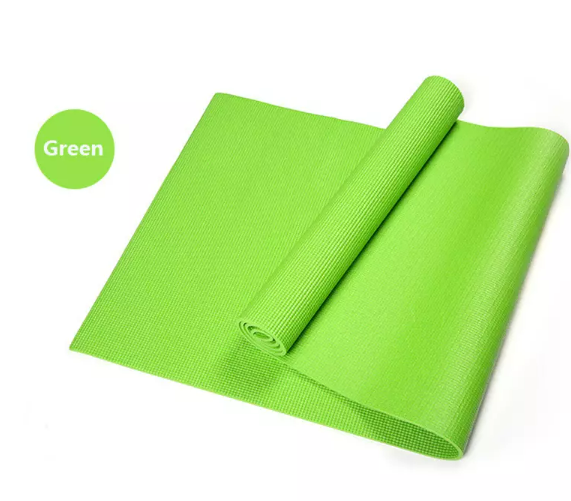
For individuals with more body weight, thicker mats provide additional support and cushioning. The extra padding helps distribute weight more evenly, reducing pressure on sensitive joints like the knees, hips, and wrists. If you have a heavier build, choosing a mat that is 1/2 inch or thicker ensures that your practice is more comfortable and joint-friendly.
Thicker mats also help prevent sinking into the mat during poses like Downward Dog or Child's Pose, which can be a concern for heavier practitioners on thinner mats. A thicker mat ensures that you’re supported throughout your practice.
Lighter practitioners may benefit from thinner mats, as they provide a firmer connection to the ground. For those with a smaller frame or less body weight, a thicker mat may feel too cushioned, making it harder to maintain stability during balance poses. A thinner mat allows for better ground contact, helping you feel more stable during your practice.
However, even lighter practitioners should ensure that the mat offers enough comfort for sensitive joints, especially during floor-based poses. A mat in the 1/4 inch range can strike a good balance between stability and comfort. This will allow a firmer surface while offering adequate support.
● Heavier Practitioners: Thicker mats (1/2 inch or more) provide the necessary cushioning to support the body, reduce pressure on joints, and prevent sinking into the mat during weight-bearing poses.
● Lighter Practitioners: Thinner mats (around 1/4 inch) will provide better stability and a firmer ground connection, while still offering joint protection for floor-based postures.
For those with joint sensitivity, a thicker mat can provide significant relief. The added cushioning helps protect knees, wrists, and the spine during yoga practice, reducing the risk of discomfort and injury. Mats thicker than 1/2 inch are ideal for individuals with joint issues, as they provide the extra support needed during weight-bearing poses.
If you have arthritis, fibromyalgia, or other conditions that affect your joints, consider investing in a thicker, more cushioned mat to ensure a comfortable and safe practice.
While thicker mats offer more comfort, they can also pose challenges in terms of stability. Mats that are too thick can make balancing poses feel unstable, as the excess cushioning may cause your feet to sink too much into the mat. For poses that require precise alignment and balance, such as Warrior III or Tree Pose, an overly thick mat may hinder your performance.
It's important to find a thickness that provides the right amount of cushioning without compromising stability.
If you need to carry your mat to and from class, consider how easy it is to transport. Thicker mats, while more comfortable, tend to be heavier and bulkier, which can make them harder to roll up and carry. If portability is a priority, you may want to opt for a thinner mat that is lightweight and easier to store.
The material of your mat impacts its durability and comfort. Thicker mats tend to use denser materials, which may be more durable but also heavier. Thinner mats are often made of lighter materials that are easier to roll up and store but may wear out more quickly. Choose a mat material that suits your practice style and durability needs.
Thicker mats are often more expensive due to the additional materials used in their construction. However, for those with joint concerns or who prefer extra cushioning, the investment can be worthwhile. Consider your personal needs and how often you'll use the mat before deciding whether the additional cost of a thicker mat is justified.
When selecting the best thickness for your yoga mat, it’s important to prioritize comfort, stability, and joint protection based on your unique practice style. Whether you need extra cushioning, better grip, or joint support, the right thickness will enhance your practice. Be sure to consider your body type, the style of yoga you practice, and any joint concerns. Suzhou Aiflex Sports offers high-quality yoga mats designed for comfort and stability, providing excellent value for all types of practitioners.
A: For comfort, a yoga mat thickness between 1/4 inch to 1/2 inch is ideal. It offers cushioning while still providing stability for various poses.
A: The ideal yoga mat thickness depends on your practice. Thicker mats provide extra cushioning for restorative practices, while thinner mats support balance poses better.
A: Beginners may prefer a medium-thickness yoga mat (1/4 inch to 1/2 inch). It strikes a balance between comfort and stability, aiding in posture and alignment.
A: A thicker yoga mat, particularly over 1/2 inch, helps protect sensitive joints, offering extra cushioning for knees, wrists, and the spine during practice.
A: Yes, thinner yoga mats (around 3mm-4mm) are ideal for hot yoga. They provide better grip and prevent slipping while managing sweat more effectively.

WeChat / WhatsApp: +86-18915709399
Skype: lisa.sunnylove


