- All
- Product Name
- Product Keyword
- Product Model
- Product Summary
- Product Description
- Multi Field Search


Views: 0 Author: Site Editor Publish Time: 2025-09-17 Origin: Site


Want a whistle that cuts through noise? In this guide you’ll learn practical, repeatable ways to whistle loudly with your mouth and how to get the best projection from a sports whistle like The Whistle by Aiflex. Suzhou Aiflex Sports Co.,Ltd combines product design and coaching know-how to offer a stainless steel pea whistle built for coaches, lifeguards, referees and anyone who needs reliable attention in noisy environments. Read on to master four proven mouth techniques, get hands-on tips for using a sports whistle, and follow a compact 7-day practice plan that builds real volume and clarity.
A loud whistle gets attention fast. Short, sharp blasts are best for immediate attention or stopping play; long sustained blasts are better for alerts and evacuation. The human ear locates quick, high-intensity sounds more reliably, so maximizing burst volume and attack matters. Whether you’re a coach signaling a play or a lifeguard calling for help, making each blast clear reduces confusion.
Different settings demand different whistle strategies. On a windy field you need short, forceful pulses. At a pool or in a crowded venue you may rely on a high-pitched piercing tone to carry over chatter. For emergencies, a universally understood pattern such as three short blasts is often most effective. Knowing which sound pattern fits the situation is as important as producing the sound itself.
Technique and a quality whistle work together. A well-made stainless steel pea whistle projects farther and cuts through ambient noise better than cheap plastic models. Combine progressive practice with a durable whistle and you’ll consistently be heard even at a distance.
Below are step-by-step methods that cover the loudest attention-getting approaches and more musical or hands-free options. Practice each method slowly, focusing on seal and airflow before increasing power.
Steps:
Choose a finger formation: index and middle fingers together or the "OK" thumb-index method. Trim nails if needed.
Wet your lips slightly so they seal around your fingers without slipping.
Place fingertips into your mouth so the pads touch the tongue and the knuckles rest against the lips.
Fold the tongue back gently so the tip is out of the way and the space behind the fingers forms a narrow channel.
Seal your lips tightly around the fingers and blow a fast, focused burst of air.
What to watch for and quick fixes:
If air leaks at the corners, tighten your lips and push fingers a little deeper for a better seal.
If tone is airy, fold the tongue back further to better focus airflow.
Start with short bursts and increase strength as you gain control.
Steps:
Moisten lips and form a small, rounded O with the lips, leaving a narrow aperture.
Place the tongue low with its tip just behind the lower teeth and create a slight upward arch to form a resonant chamber.
Start with gentle air and gradually increase intensity while maintaining the small opening.
Adjust the tongue tip forward or backward to change pitch and the size of the lip opening to change volume.
Why it works:
The pucker whistle uses lip compression and a tuned oral cavity to amplify sound and can get pleasantly loud while allowing melodic control.
Steps:
Press the tongue against the roof of your mouth to create a small gap near the front teeth.
Blow air over that gap and experiment with the tongue curvature and jaw height.
This whistle can be musical and clearer than a weak pucker, but it often needs refinement to compete with finger-whistle volume.
How to boost volume:
Increase breath pressure in short bursts and tighten the lips slightly to focus the airstream.
Steps:
Form a small O with your lips, similar to the pucker method, or place fingertips lightly to shape the mouth.
Draw a sharp, quick inhalation through the mouth rather than exhaling.
Short, forceful inhalations create a sudden, high-contrast sound that can be startling and effective when you cannot blow out forcefully.
When to use it:
Use inhale whistling when breath control is limited or as an occasional backup to exhale whistles.
Method | Best for | Hands required | Learning curve |
Finger whistle | Maximum piercing volume | Yes | Medium to high |
Pucker whistle | Musical + reliable volume | No | Low to medium |
Tongue resonance | Tone control, melodic | No | Medium |
Inhale whistle | Emergency attention | Sometimes | Low |
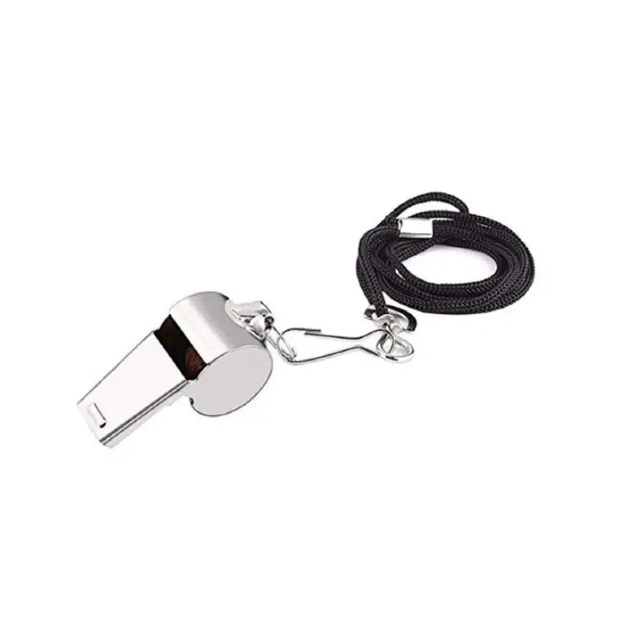
Sports whistles are designed to be loud and consistent. Here’s how to use one effectively.
Fill the lungs, then use short, sharp blasts rather than continuous blowing. A compact, high-pressure exhale produces maximum initial amplitude and protects your breath for repeated signals during a game.
Hold the whistle so the mouthpiece is level with your jaw and tilt it slightly downward to project sound outward and across a field. Keep the wrist relaxed and aim toward the audience or players.
Use different blast patterns to communicate:
Single short blast: get attention.
Two short blasts: stop play or indicate a minor pause.
Three short blasts: emergency or recall.
Long steady blast: sustained alert or timeout.
Practice switching patterns with crisp onset and release so teammates know your signals instantly.
Rinse the pea chamber regularly and let the whistle air dry. A removable pea or pea-less stainless steel design reduces moisture build-up and prevents sticking. Secure the whistle on a lanyard and avoid leaving it in direct sun or near corrosive chemicals to extend life.
Consistency beats occasional effort. These drills are short and focused.
·
Day 1: Warm-up breathing exercises, 10 minutes practicing diaphragmatic breaths and short explosive exhales.
Day 2: Pucker technique focus, 10–15 minutes, focusing on lip seal and small aperture.
Day 3: Finger whistle practice, 15 minutes of short bursts and seal adjustments.
Day 4: Sports whistle work, practice single and double blasts at varying intensity for 15 minutes.
Day 5: Projection practice, move to a larger room or outdoor space and test distance with both mouth and sports whistles.
Day 6: Noise simulation, have a partner create background chatter while you practice clear, repeatable signals.
Day 7: Combine methods in sequences and time yourself for recovery speed between blasts.
Take your practice outside to replicate wind and crowd conditions. Use partner drills to test signal recognition at different distances and angles.
Use a phone decibel app to benchmark improvements or mark distances where your signal is clearly heard. Track clarity and latency with partner feedback.
Fix: Tighten the lip seal, use a mirror to find leaks, and slightly adjust finger depth for finger whistling.
Fix: Practice folding or arching the tongue away from the air channel and use short bursts until you gain muscle memory.
Fix: Add diaphragmatic breathing exercises and explosive exhale drills. Interval sprints also improve breath power for short energetic blasts.
A high-quality stainless steel pea whistle projects better, resists weather and lasts longer. For field use choose a whistle engineered for projection and reliable pea action. For hygiene, pea-less options are available for frequent public use.
Wear the whistle on a lanyard with an adjustable bead so it hangs comfortably at chest level without bouncing. A breakaway feature improves safety for poolside or crowded environments.
Clean the mouthpiece frequently. If you share whistles, disinfect between users or provide personal mouthpiece covers.
Standard simple codes reduce miscommunication:
Three short blasts: urgent help required.
One long blast: all clear or return.
Repeated short blasts: stop immediately.
Post these codes at your venue and practice them with staff.
Mastering how to whistle loudly combines technique, practice and the right equipment. Suzhou Aiflex Sports Co.,Ltd designs durable stainless steel whistles like The Whistle by Aiflex that deliver clear projection when you need it most. Try the 7-day drills, pair them with a quality whistle, and you’ll be heard farther and faster. For product details, bulk orders or coaching tips contact us today — contact us at Suzhou Aiflex Sports Co.,Ltd and let our team help you choose the best whistle for your needs.

WeChat / WhatsApp: +86-18915709399
Skype: lisa.sunnylove


