- All
- Product Name
- Product Keyword
- Product Model
- Product Summary
- Product Description
- Multi Field Search


Views: 0 Author: Site Editor Publish Time: 2025-11-20 Origin: Site


Speed training is essential for athletes looking to enhance their sprinting ability, whether it's for track events, football, or other high-speed sports. One tool that has become increasingly popular for improving acceleration and speed is the Speed Chute. This resistance training equipment adds an extra challenge to your sprint workouts, improving muscle engagement, running mechanics, and overall speed. In this guide, we will explore how to use a speed chute for sprint training, how it works, and how to incorporate it effectively into your training program.
A Speed Chute is a specialized resistance training device designed to enhance sprinting performance. It attaches securely around the waist with a belt, and as you sprint, it deploys a parachute-like fabric behind you. This fabric catches the wind, creating air resistance that forces your body to work harder. The resistance varies in proportion to your speed — the faster you run, the more resistance you generate, making it a self-regulating tool that automatically adjusts to the intensity of your sprint. Over time, this added resistance helps athletes develop power, speed, and endurance, ultimately improving their sprinting abilities.
Speed Chute training offers numerous benefits that contribute to enhanced athletic performance. By introducing resistance, the Speed Chute promotes quicker neuromuscular adaptation, leading to faster acceleration during sprints, which is crucial for athletes looking to get faster off the starting line. Sprinting is a dynamic activity that engages the posterior chain — the muscles in your hamstrings, glutes, and lower back — and the Speed Chute emphasizes these muscle groups, helping to build functional strength and power that are key for explosive movements in sports. The resistance created by the Speed Chute forces you to maintain optimal sprinting form. It encourages proper body alignment, a higher knee drive, and an elongated stride, all of which are critical for effective sprinting. With consistent use, athletes can develop better running posture and more efficient movement patterns.
Speed Chute training stands out among other resistance methods such as sled pulls or hill sprints due to its unique ability to mimic real-world race conditions. Unlike sled pulls, which require significant physical exertion due to friction, or hill sprints, which depend on incline, the Speed Chute provides wind resistance, a more natural form of resistance. It also allows athletes to perform sprinting drills that closely resemble actual racing scenarios. Moreover, its lightweight and portable design make it easy to carry and use anywhere — from tracks to fields to parks. This makes it a versatile tool for training the entire kinetic chain involved in sprinting, unlike other methods that might only target specific muscles.
Before starting Speed Chute training, it's important to select the right chute size based on your experience and training goals. Speed chutes come in various sizes, ranging from small 4-6 feet models to larger 8+ feet chutes for more advanced training. If you're new to resistance training or sprinting, it's recommended to start with a smaller chute (around 4-6 feet in diameter). This allows you to gradually adapt to the added resistance without overloading your muscles, helping you build a strong foundation for sprinting. For more experienced athletes looking to increase their top-end speed and power, a larger chute (6-8 feet) provides a higher level of resistance. This is ideal for advanced sprint training, as it challenges your body's strength and endurance in a more intense way.
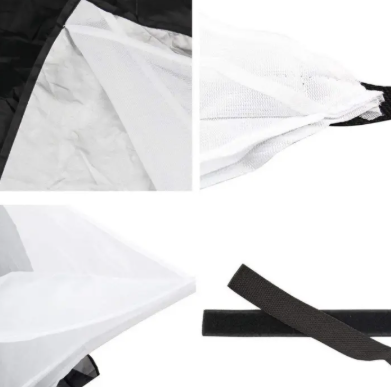
To effectively use the Speed Chute, start by securing the waist belt comfortably around your torso. The belt should fit snugly but not restrict movement, ensuring that you can sprint freely without discomfort. Ensure the cords that connect the chute to the belt are untangled and fully extended. This will prevent any issues with the chute failing to deploy correctly during your sprint. Once everything is properly adjusted, ensure that the chute is fully unfurled and stretched out behind you. This will allow it to catch air as you sprint, providing the necessary resistance.
As with any type of intense physical training, warming up is crucial to avoid injury. A good warm-up should include dynamic stretches and light jogging to activate the muscles involved in sprinting. Focus on loosening your hips, legs, and lower back, as these areas are critical for generating speed. A proper warm-up will prepare your body for the added resistance and help you perform at your best during your training.
If you're new to Speed Chute training, start with short sprints (20-30 meters) to get used to the resistance. Sprint 20 meters with the chute deployed behind you, focusing on maintaining good form throughout the sprint. Keep a slight forward lean, drive your knees up, and swing your arms forcefully. After each sprint, rest for 1-2 minutes to allow for recovery. Perform 4-6 sprints, focusing on keeping your form consistent throughout each repetition. This will help you adapt to the resistance without compromising your technique.
As you become more accustomed to the added resistance, gradually increase the intensity of your training. After 2-3 weeks of training, start increasing the distance of your sprints to 40-60 meters. This will improve your endurance while continuing to challenge your acceleration capabilities. Once you've adapted to the smaller chute, try adding a second Speed Chute for even more resistance. This progression will help you build explosive power and further develop your speed.
It's essential to monitor your sprinting mechanics when using a Speed Chute. Always maintain a strong forward lean, good knee drive, and relaxed arm swing to maximize your sprinting efficiency. Ensure that the added resistance doesn't cause you to lean too far forward or shorten your stride. The goal is to maintain control and form while challenging your body with resistance.
Contrast training is an advanced technique that involves alternating between resisted sprints (using the Speed Chute) and unresisted sprints. This method helps train both speed and resistance adaptation. Sprint with the Speed Chute for 30 meters, rest for 1-2 minutes to allow for recovery, and then sprint 30 meters without the chute, focusing on explosive speed. This alternating approach helps develop neuromuscular power, allowing athletes to train both their speed and resistance abilities in a single session.
To simulate game-like situations where agility is required, incorporate lateral movements into your drills. Set up agility cones in a zig-zag pattern to challenge your agility. Sprint from cone to cone, changing directions quickly while maintaining the resistance from the chute. This will help improve your agility, speed, and overall fitness.
To maximize the benefits of your Speed Chute training, consider combining it with other exercises that complement your sprinting abilities. Explosive jumps, bounds, and other plyometric exercises activate fast-twitch muscle fibers, helping to complement the resistance provided by the Speed Chute. Incorporating lower body strength exercises such as squats, lunges, and deadlifts will strengthen your posterior chain and improve your sprinting performance.
One of the main challenges during Speed Chute training is maintaining proper form under resistance. The added load can cause you to lean forward or shorten your stride. To avoid that, focus on leaning slightly from your ankles, not from your waist. This helps you stay balanced and avoid tipping over. Ensure your strides remain long and powerful, focusing on full hip extension to maintain optimal sprinting form.
Equipment malfunctions, such as tangled cords or poorly inflated chutes, can disrupt training. Before each session, check the chute and cords for any damage or tangling. Try practicing on calm days, or indoors if necessary, to ensure a smooth training experience. Windy conditions can make the chute difficult to control, so it's best to practice in calm weather conditions whenever possible.
As you fatigue, your form may deteriorate, which increases the risk of injury. To avoid this, reduce the resistance by using a single chute or decreasing the sprint distance. Instead of pushing through more sets with poor form, perform fewer sprints with better technique to maintain your safety and effectiveness.
To gauge your progress, begin by recording baseline sprint times. Perform a 30-meter sprint without the Speed Chute, and record your time. As you continue training, compare your times every 4-6 weeks to assess improvement.
Technology can provide more precise tracking of your progress. Consider using electronic timing gates, which can measure your sprint times with great accuracy. Recording your sprints allows you to analyze your form and identify areas that need improvement, which is especially useful in fine-tuning your technique.
As you progress, adjust your training program accordingly. If you've improved your sprint times, consider adding more resistance by using a larger Speed Chute or adding a second chute. Keep a training journal to log your performance, set new goals, and track improvements over time. By consistently monitoring your progress and adjusting your training, you can continue to improve your speed, power, and overall sprint performance with Speed Chute training.
Using a Speed Chute for sprint training is an effective way to increase your speed, power, and acceleration. Whether you're a beginner or an advanced athlete, incorporating speed chute workouts into your routine can help you break through performance plateaus and achieve your sprinting goals. By following the tips and drills outlined in this guide, you'll be able to maximize the benefits of this powerful training tool and improve your sprinting performance over time. Suzhou Aiflex Sports offers high-quality speed chutes designed for both professional and recreational athletes. Their products help athletes enhance performance while minimizing injury risks.
A: A Speed Chute is a resistance training tool that attaches to your waist and opens up behind you as you sprint. It creates air resistance, helping to build power, speed, and endurance.
A: To use a Speed Chute, attach it securely to your waist, start sprinting, and allow the chute to open behind you. Focus on maintaining form while the resistance challenges your muscles.
A: Using a Speed Chute enhances acceleration, builds strength in your lower body, and improves sprint mechanics, making it an effective tool for improving running speed.

WeChat / WhatsApp: +86-18915709399
Skype: lisa.sunnylove


