- All
- Product Name
- Product Keyword
- Product Model
- Product Summary
- Product Description
- Multi Field Search


Views: 0 Author: Site Editor Publish Time: 2025-09-23 Origin: Site


Inflating an exercise ball correctly is essential for safety and performance — place it on a yoga mat while testing for stability. Suzhou Aiflex Sports shares practical steps, size-checking tips, and safety notes so your new ball lasts longer and works exactly as intended.
Gather everything before you begin to avoid interruptions and mistakes:
Exercise ball (check the packaging for recommended diameter).
Pump — choose a manual hand/foot pump for portability or an electric pump for speed.
Plug and plug remover — most balls include these; keep them together.
Tape measure or ruler and a size chart (printable diameter guide helps).
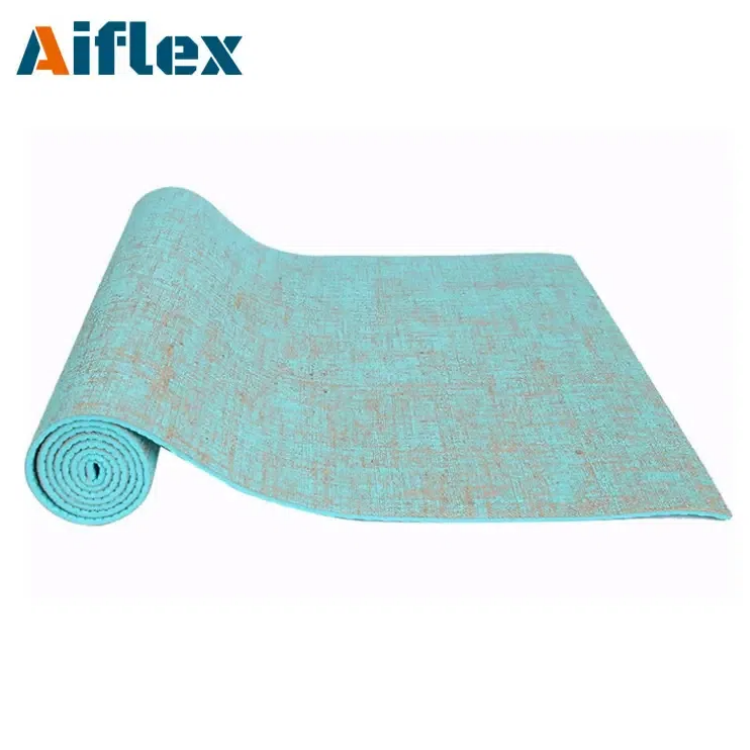
Clean yoga mat to sit the ball on while inflating and testing.
Marker or masking tape (optional) to mark the “filled” level on the ball.
Pick a clean, obstacle-free area. Use a yoga mat beneath the ball to protect the surface and to anchor the ball while you work. A soft, even floor (wood, laminate, or carpet) is ideal during inflation. Avoid rough concrete or anywhere with sharp objects.
Open the package and unroll the ball. Let it warm to room temperature if it was compressed for shipping — cold material is less flexible. Locate the small air plug (usually a plastic stopper) and the plug remover tool. Inspect the ball for visible defects before inflating.
Use the correct adaptor that came with your pump; most pumps include multiple nozzle sizes. Insert the nozzle gently and firmly into the valve. If the nozzle slips, switch to a snugger adaptor. Avoid forcing the nozzle in at an angle — that can damage the valve.
Pump the ball to about 80% of the target diameter. This lets the PVC or anti-burst material stretch gradually and relieves stress on seams. Over-inflating on the first fill can cause permanent stress points. After reaching ~80%, seal the valve and let the ball rest in a shaded, room-temperature area for 24 hours to allow the material to settle.
After 24 hours, check the diameter and add air until you reach the recommended size. Use a tape measure across the ball's widest point or use a printed diameter chart. Make small increments — 5–10 pumps at a time — then re-measure. The ball should be firm but have a little give when you press it with your thumb.
Insert the plug fully and, if desired, place a small piece of tape over the valve to prevent accidental opening. Mark the filled level with a small strip of masking tape so future inflation is quick and consistent.
Most balls are labeled with target diameters (e.g., 55 cm, 65 cm, 75 cm). Lay a tape measure horizontally across the center of the ball to read diameter. For consistent results, have someone hold the ball steady or use tape marks on the floor to position it.
45–55 cm: suitable for shorter users and some desk-chair applications.
55–65 cm: general-purpose for average-height users; good for mixed workouts.
65–75 cm: ideal for taller users and full-range stability training.
For desk seating choose slightly smaller sizes for better posture; for dynamic workouts and Pilates pick the size that allows your knees to be at approximately 90 degrees when seated.
Pros: inexpensive, portable, and usually included with balls. Cons: more labor-intensive; can take 5–15 minutes depending on pump efficiency and ball size. Hand pumps are great for topping off and small adjustments.
Electric pumps significantly reduce physical effort and speed up the first fill (1–4 minutes). They provide continuous airflow and are helpful for large or multiple balls. Always monitor pressure and diameter when using an electric pump to avoid over-inflation.
Bicycle pumps can be used with the right adaptor, but they are slower. Avoid high-pressure compressors unless equipped with a regulator — too much pressure can damage the ball.
Inflate in short bursts and measure frequently.
Stop when the ball is firm, not rock-hard. A properly inflated ball should compress about 2–3 cm when you sit on it.
If you hear creaking or see bulging seams, deflate immediately to a safer level.
Fill the ball and listen for escaping air. To locate tiny punctures, partially submerge the inflated ball in a bathtub or basin and watch for small air bubbles. Mark the spot and use a patch from a repair kit (clean the area, apply adhesive, press on patch, wait as directed).
Too firm: let out small amounts of air until the ball feels right for the movement — core training typically benefits from firmer inflation.
Too soft: add air in small increments; avoid large pumps at once to prevent over-inflation.
Keep the ball indoors and away from direct sunlight and heat sources. Heat causes internal pressure to rise; cold makes the material stiffer. Avoid storing near sharp tools or pets that may puncture it.
Wipe the surface with a damp cloth and mild soap. Avoid abrasive cleaners or solvents that can degrade the material. For anti-burst or textured surfaces, use a soft brush to remove dirt.
Check for scuffs, seam separation, or material thinning monthly if used frequently. Replace the ball if you notice brittleness, cracks, or uneven expansion.
Use a yoga mat under the ball during workouts to protect from abrasive floors. Rotate between two balls if used daily to reduce wear. Proper inflation and storage are the simplest longevity measures.
Re-seat the plug securely first. If air still leaks, locate punctures using the water-bath method and patch them. If the leak is near a seam or the plug area, contact the supplier for warranty support — many quality manufacturers offer replacements for early defects.
Desk use: 45–65 cm depending on desk and user height; choose a slightly firmer inflation for support. Full workout: 65–75 cm is common for dynamic movements and full torso engagement.
Replace if the material flakes, crumbles, shows deep scratches, or if seams separate. Also replace if the ball no longer meets diameter/firmness after repeated inflation attempts — that may indicate internal material fatigue.
Anti-burst technology reduces the risk of sudden, violent bursting — the ball deflates slowly instead. For high-impact workouts or commercial studio use, choose anti-burst rated balls for added safety.
Use a slightly softer inflation for gentle stretching and mobility work. The ball cushions joints and helps with controlled movement.
A firmer ball offers better reactive feedback for core and balance exercises. Ensure the ball size allows full movement and stable foot placement.
When used as a seat, a ball that brings your hips slightly higher than your knees promotes upright posture. Keep a yoga mat below to prevent sliding and floor damage.
Inflating a yoga ball is straightforward when you follow the 80%-rest-top-up approach, measure carefully, and test on a yoga mat for stability. Suzhou Aiflex Sports combines nearly 15 years of manufacturing experience with practical product support to help customers choose the right exercise ball and yoga mat bundles for their needs — contact us to request bundle quotes or product samples, and we'll guide you to the ideal setup for safety and performance.
Contact us: for product details, bulk pricing, or custom color/branding options, contact us at Suzhou Aiflex Sports — we’re ready to help you build the perfect yoga mat + ball starter bundle.

WeChat / WhatsApp: +86-18915709399
Skype: lisa.sunnylove


