- All
- Product Name
- Product Keyword
- Product Model
- Product Summary
- Product Description
- Multi Field Search


Views: 0 Author: Site Editor Publish Time: 2025-11-19 Origin: Site


Jump rope workouts are an excellent way to boost your fitness, but did you know that the surface you jump on matters? Without the right protection, your joints and equipment can suffer. A good skipping mat is essential to keep your workouts safe and effective. In this guide, you'll learn how the right mat can enhance your performance, protect your joints, and extend the life of your jump rope.
Why Does a Mat Matter? A proper skipping mat absorbs shock, reducing stress on your ankles, knees and hips. It also minimizes the wear and tear on your jump rope, ensuring that it lasts longer. Whether you're working out on hardwood, tile, or concrete, a mat provides the protection your body and equipment need for safe and effective training.
The material composition of your skipping mat plays a crucial role in its overall performance and longevity. Rubber mats are excellent at absorbing shock and offer superior durability, making them ideal for high-impact training. Their heavier weight ensures they provide excellent joint protection, especially during intense workouts. On the other hand, foam (EVA) mats are lighter and portable, which makes them ideal for people who need a travel-friendly option. They do offer cushioning but may not last as long as rubber mats. PVC mats are a budget-friendly and durable choice, perfect for both indoor and outdoor use, and are resistant to wear and tear. For an eco-friendly option, TPE mats strike a balance between durability, cushioning, and environmental sustainability, offering a greener alternative without sacrificing performance.
The thickness of a jump rope mat directly influences its comfort and stability. Generally, mats in the 6mm-8mm range strike the ideal balance between joint protection and stability, offering enough cushioning to reduce impact without affecting performance. Thicker mats, in the 8-10mm range, are great for individuals with joint concerns or higher body weight, as they provide extra cushioning. However, excessive cushioning might affect stability during quick jumps or high-speed workouts. For speed jumpers, thinner mats (5mm-6mm) are preferred as they provide a firmer surface that allows for quicker rope rotations while still offering some cushioning.
The surface texture of your mat is an essential feature that impacts your grip and overall workout performance. Textured mats, which have slight grip patterns, offer stability for your feet, reducing the likelihood of slipping while also ensuring your jump rope maintains consistent speed. These mats are especially beneficial for moderate-intensity training where grip and stability are critical. For those engaged in high-speed workouts, smooth mats are ideal because they create less friction, allowing for faster rope rotations and enhanced performance. Depending on your workout style, choosing the right surface texture is vital for maximizing your results.
The size of your jump rope mat should be tailored to your available space and workout requirements. Standard mats typically measure around 3'x5' (36"x60") or 4'x6'to accommodate more space for complex routines. If you're just beginning or working in a smaller area, a smaller mat may suffice. However, for advanced jump rope exercises, freestyle routines, or when you want to avoid catching the rope's edge, a larger mat will be more suitable. It's important to select a mat that provides enough room to move freely while covering your entire jump rope area to avoid interruptions during your workout.
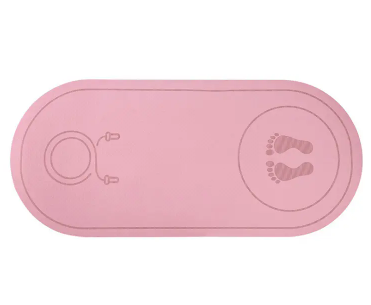
Jumping rope on hard surfaces like concrete or tile can be tough on your joints, leading to long-term pain and injury. A good jump rope mat helps mitigate this by absorbing up to 80% of the impact, significantly reducing stress on your ankles, knees, and hips. Rubber mats with a 6mm-8mm thickness are particularly effective for joint protection. Foam mats are also ideal for those who need extra cushioning, especially beginners or people with existing joint issues. Additionally, using a mat protects your jump rope from damage. Abrasive surfaces like asphalt can cause the rope to wear down quickly, but a smooth, non-abrasive mat helps preserve the rope's condition, minimizing the need for frequent replacements.
A stable, well-cushioned mat can also improve your workout performance. By providing better grip and stability, the right mat can help you maintain a consistent rhythm and reduce the risk of tripping or losing form during your jump rope sessions. Mats that offer a firm surface prevent sinking and give you better control, while those with superior grip enhance push-off power, allowing you to jump higher and rotate the rope faster. Furthermore, a jump rope mat can reduce noise by up to 70%, making it a great choice for those training in shared spaces like apartments.
Choosing the right jump rope mat requires consideration of your jumping style, workout environment, and budget. Freestyle jumpers, who need more space for tricks and complex movements, should opt for larger mats, allowing room to move in all directions. Speed jumpers, on the other hand, should choose thinner mats (around 5mm), which provide quicker feedback from the floor and allow for faster rope rotations. The material of your mat also depends on whether you plan to use it indoors or outdoors. Outdoor mats should be made from UV-resistant materials like rubber or TPE, as these will withstand sun exposure without deteriorating. For indoor use, foam and PVC mats are ideal for comfort and portability.
Your budget will also play a role in the type of mat you choose. While rubber and TPE mats are often more expensive, they offer superior durability and performance, particularly for long-term use and joint protection. PVC mats are a more affordable option, still offering durability and protection but at a lower price point. Whatever your budget, it's crucial to choose a mat that aligns with your workout goals and ensures the best possible experience. For long-term durability, consider investing in a rubber mat, known for its sturdiness and resistance to wear and tear.
To ensure your jump rope mat lasts for many workouts, proper maintenance is essential. Regularly clean your mat with mild soap and water to remove dirt and prevent buildup, avoiding harsh chemicals that can damage the surface. Storing your mat correctly is also important. Always store it flat or rolled up, as folding it can cause creases and affect its shape over time. Regular care will help extend the mat's lifespan and keep it in good condition for years, ensuring you can continue benefiting from its cushioning and performance-enhancing qualities.
| Material | Durability | Cushioning | Portability | Eco-Friendly |
|---|---|---|---|---|
| Rubber | High | High | Low | No |
| Foam (EVA) | Moderate | Moderate | High | No |
| PVC | Moderate | Low | High | No |
| TPE | High | Moderate | Moderate | Yes |
Choosing the best jump rope mat for your home workouts is an investment in your health and performance. By selecting a mat that suits your jumping style, protects your joints, and improves your workout experience, you'll be able to enjoy safe and effective training for years to come. Whether you're looking for durability, portability, or cushioning, there's a skipping mat that fits your needs. Happy jumping!
Suzhou Aiflex Sports offers premium mats designed for jump rope enthusiasts, enhancing your workout while ensuring durability and joint protection.
A: A skipping mat is a specially designed surface that provides cushioning and traction for jump rope exercises. It helps protect your joints and prolong the life of your rope by offering a smooth, durable surface.
A: When choosing the best jump rope mat for home workouts, consider factors like material (rubber, foam), thickness, size, and texture. Look for a mat that offers both comfort and durability.
A: A skipping mat absorbs impact, reducing stress on your joints. It also provides a stable, non-slip surface to ensure safety and improve performance during jump rope workouts.

WeChat / WhatsApp: +86-18915709399
Skype: lisa.sunnylove


