- All
- Product Name
- Product Keyword
- Product Model
- Product Summary
- Product Description
- Multi Field Search


Views: 0 Author: Site Editor Publish Time: 2025-10-30 Origin: Site


Among fitness enthusiasts, the question often arises: Are push-up bars harder than normal push-ups? Whether you are building a home gym or training at a fitness center, push up bars have become a popular tool to enhance strength training. These small yet powerful devices promise to make traditional push-ups more effective by increasing range of motion, protecting the wrists, and engaging deeper muscle fibers.
But do they actually make push-ups more difficult? Or do they simply make them more efficient?
This article explores the real differences between push-up bars and standard push-ups — from biomechanics to performance — and helps you understand how to use them to your advantage.
A push up bar is a compact piece of workout equipment designed to elevate your hands during push-ups. Typically made of high-grade steel or reinforced plastic with non-slip bases and ergonomic grips, push-up bars slightly lift your body off the ground, allowing you to dip deeper with each repetition.
This elevation changes the mechanics of the exercise:
Your wrist angle becomes more neutral, reducing joint strain.
The range of motion increases, allowing your chest to go lower than in standard push-ups.
Your muscles engage more fully, especially in the chest, shoulders, and triceps.
Essentially, a push up bar changes the geometry of your push-up — the same exercise, but with improved alignment, comfort, and control.
Instead of replacing traditional push-ups, it refines them.
When people say “push-up bars are harder,” what do they actually mean?
“Harder” can refer to several factors:
Muscle Activation: More muscles are engaged per repetition.
Range of Motion: A deeper push requires greater effort.
Balance and Control: Stabilizer muscles work harder to maintain alignment.
Perceived Exertion: The exercise feels more intense, even if mechanical load is similar.
In short, push up bars make push-ups more challenging not because they are inefficient, but because they demand better control, coordination, and depth. For most users, that “harder” feeling actually signals a more effective workout.
The following table highlights the core biomechanical differences between regular floor push-ups and those performed using push-up bars:
Aspect | Normal Push-Up | Push-Up Bar Exercise |
Wrist Position | Extended, high joint stress | Neutral, ergonomic wrist angle |
Range of Motion | Limited by floor contact | Deeper stretch and contraction |
Muscle Engagement | Moderate activation | Enhanced activation of chest, shoulders, and triceps |
Core Stability | Stable and predictable | Requires more balance and coordination |
Difficulty Perception | Easier for beginners | Feels harder due to increased motion |
Joint Impact | Potential wrist strain | Reduced pressure on wrists and shoulders |
From a physiological standpoint, push up bars shift some of the effort away from joint stability and into muscle engagement. This leads to greater activation per rep and a slightly steeper learning curve — especially for beginners.
When performing a floor push-up, your chest stops when it touches the ground. With push-up bars, however, your body can lower several inches deeper. This extended range of motion forces your muscles — especially the pectorals and triceps — to stretch and contract more intensely.
That added depth equals more mechanical tension, which leads to faster strength and muscle growth over time.
Because push-up bars elevate your hands, your core muscles — including the rectus abdominis and obliques — must stabilize your body to prevent swaying. This means you’re not just training your chest or arms; your abs are working harder, too. The result is a more integrated, full-body workout.
Push-up bars slow down the exercise. With better wrist alignment and comfort, you can focus more on contracting the target muscles instead of just completing repetitions.
This controlled tempo may feel more demanding, but it enhances neuromuscular connection — one of the keys to muscle growth and athletic performance.
Unlike regular push-ups, push-up bars encourage precision. You can perform slower eccentric (lowering) and concentric (pressing) phases without discomfort.
This deliberate control increases time under tension, a proven driver of muscle hypertrophy.
So yes — it feels harder, but that’s what makes it more productive.
Not everyone will have the same experience when switching to push-up bars. The following groups may find them initially more difficult:
Beginners: Those new to strength training may struggle with stability and depth control.
People with Limited Core Strength: Since push-up bars require more balance, weak core muscles may fatigue faster.
Individuals Recovering from Injury: Although push-up bars relieve wrist strain, the increased motion can stress shoulders if used incorrectly.
Endurance Athletes: Because each repetition works the muscles more deeply, maintaining high volume sets becomes tougher.
Despite this learning curve, most users adapt quickly. Within a few weeks, push-up bars start to feel natural — and the strength gains become evident.
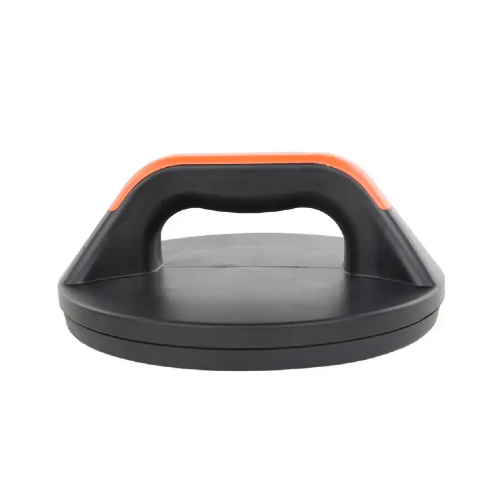
One of the biggest advantages of push up bars is flexibility. You can vary hand width and orientation to target different muscle groups:
Narrow Grip: Focuses on triceps and inner chest.
Wide Grip: Emphasizes the outer chest and shoulders.
Neutral Grip: Ideal for overall balance and comfort.
Adjusting your body angle also changes intensity:
Feet Elevated: Adds resistance by shifting weight forward.
Knees Down: Reduces load for beginners or recovery sessions.
This adaptability allows anyone — from novice to athlete — to use push up bars effectively.
For progressive overload, combine push up bars with:
Resistance bands: Add constant tension throughout the movement.
Weighted vests: Increase total body load.
Stability balls: Challenge balance and core engagement further.
Such combinations amplify results while maintaining joint safety.
Not all push-up bars are created equal. Look for:
Non-slip bases to prevent sliding during sets.
Ergonomic handles to maintain wrist neutrality.
Durable materials for long-term stability and support.
Quality push-up bars make your workouts more secure and comfortable, helping you focus purely on form and power.
In a word — yes.
The slight increase in difficulty translates to greater efficiency and results. Push up bars are not simply harder; they are smarter. Here’s why:
They increase range of motion, leading to better muscle activation.
They protect joints, allowing for long-term strength development.
They improve posture by training proper shoulder and wrist alignment.
They promote full-body engagement, especially in the core and stabilizers.
Over time, these benefits compound. What feels harder at first becomes a powerful tool for muscle growth and injury prevention.
Start with normal push-ups to learn proper form. Once your wrists and core are conditioned, transition to push-up bars to expand range and build deeper strength.
Push-up bars offer superior muscle stimulation and versatility. You can vary angles, depths, and even add resistance for continued progression.
If you experience wrist pain from floor push-ups, push-up bars are safer. They maintain neutral wrist alignment and reduce joint compression without sacrificing intensity.
In essence, push-up bars complement, not replace, traditional push-ups. Incorporating both ensures a balanced and adaptable upper-body training routine.
Warm Up Properly: Always activate shoulders, chest, and wrists before training.
Focus on Form: Keep your body straight, core tight, and elbows at 45° to your torso.
Control Each Repetition: Avoid bouncing; emphasize slow and steady movements.
Track Progress: Increase reps or depth gradually to prevent overtraining.
Pair with Recovery: Use stretching or foam rolling post-workout to maintain flexibility.
These simple habits ensure you gain maximum strength without injury.
Going Too Deep: Excessive range may stress the shoulders. Stop just before discomfort.
Rushing Reps: Fast reps reduce muscle engagement; prioritize control.
Incorrect Grip: Overly wide or uneven hand positions can cause imbalance.
Ignoring Core Stability: A sagging midsection reduces efficiency and increases strain.
Mindful technique transforms push-up bars from a difficult tool into a powerful training ally.
So, are push-up bars harder than normal push-ups?
Absolutely — and that’s what makes them so powerful. By extending your range of motion, engaging more muscle groups, and protecting your joints, push-up bars turn a classic movement into a total upper-body workout.
For beginners, they provide excellent wrist support and form stability. For advanced athletes, they increase intensity and offer versatile training options. No matter your level, a high-quality push up bar can elevate your performance and long-term results.
If you’re looking for professional-grade push up bars designed for comfort, safety, and durability, explore the products from Suzhou AiFlex Sports Co., Ltd. Their fitness equipment combines ergonomic design with superior craftsmanship — perfect for both home and gym use.
Contact AiFlex today to learn more or find the ideal push up bar to strengthen your training journey.

WeChat / WhatsApp: +86-18915709399
Skype: lisa.sunnylove


